
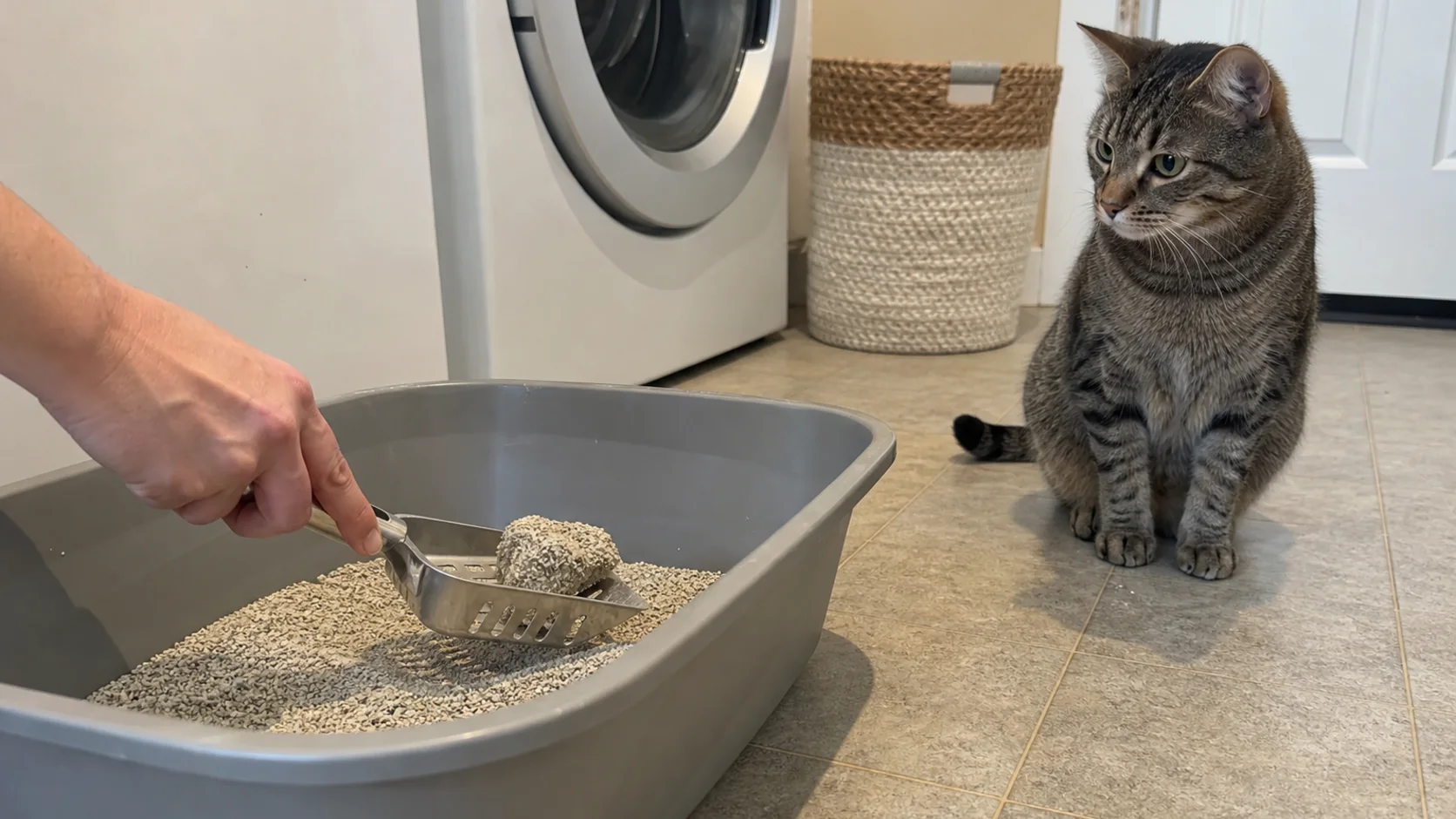
How Often Should You Clean a Litter Box?
Quick answer: Scoop every litter box at least once daily; twice daily is better for many cats and multi-cat homes. Wash the box and replace the litter on a schedule suited to the litter type—commonly weekly for clumping litter—without using strongly scented products that may repel the cat.
How often should a litter box be scooped and washed?
| Task | Starting schedule | Adjust sooner when |
|---|---|---|
| Remove urine and stool | 1–2 times daily | Multiple cats, odor, diarrhea, heavy use |
| Top up litter | After scooping as needed | Depth becomes too shallow |
| Empty and wash a clumping-litter box | About weekly | Residue, odor, avoidance, illness |
| Empty non-clumping litter | More frequently | Wet or soiled litter remains in the box |
| Replace a worn plastic box | When scratched or odor persists | Deep grooves become hard to clean |
Manufacturer instructions and the cat’s behavior matter. A box that looks acceptable to a person may already be unpleasant to a cat with a stronger sense of smell.
How to clean a litter box safely
- Remove waste with a dedicated scoop and dispose of it safely.
- Wash the empty box with hot water and mild unscented soap.
- Rinse thoroughly and dry before adding fresh litter.
- Avoid ammonia, strong fragrance, and harsh residue unless your veterinarian advises a specific disinfectant.
- Wash hands after handling litter and keep supplies away from food preparation areas.
Cleanliness is not the only reason cats avoid a box
Cats may avoid a clean box that is too small, covered, difficult to reach, placed beside a loud appliance, guarded by another cat, or filled with a disliked litter. Boxes should be easy to enter and leave, distributed through the home, and kept away from food and water.
The number and placement matter too. Use the one box per cat plus one guide as a starting setup.
When litter-box changes need a veterinarian
Do not assume urinating or defecating outside the box is spite. Pain, urinary disease, constipation, diarrhea, arthritis, stress, and other conditions can change litter-box use. Arrange an examination for a new pattern.
Repeated trips with little or no urine, crying, blood, vomiting, or collapse can indicate an emergency. A male cat unable to pass urine needs immediate veterinary care.
Common questions
Is scooping a litter box once a day enough?
Once daily is a minimum starting point. Twice-daily scooping often controls odor better and is especially useful with several cats or a heavily used box.
How often should all the cat litter be changed?
Clumping litter is commonly replaced and the box washed about weekly, but the product, number of cats, box size, and odor may require a different schedule.
Can I clean a litter box with bleach?
Routine cleaning usually needs hot water and mild unscented soap. Ask your veterinarian about disinfection after contagious illness and never mix bleach with ammonia or other cleaners.
Sources and editorial note
This guide was prepared by the Petive Editorial Team using guidance from established veterinary and animal-care organizations. Unless a named reviewer is shown, it has not been independently reviewed by a veterinarian. It provides general educational information, not veterinary diagnosis or treatment. Ask your veterinarian about your individual pet.