
We Accidentally Fed Our Dog Twice a Day for Weeks
Everyone in the house was trying to care for Oscar. That was exactly how breakfast happened twice—and sometimes not at all.
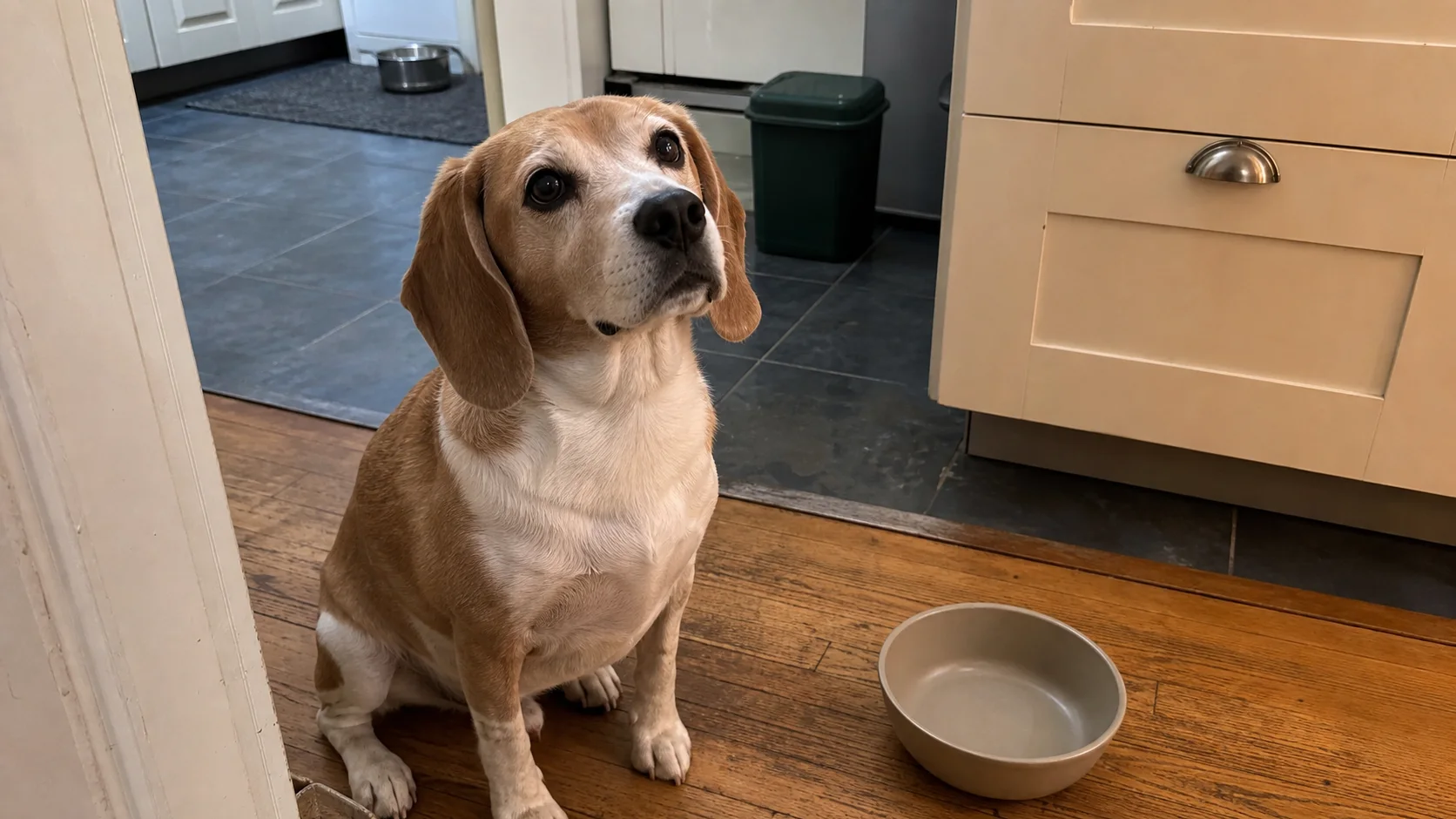
The message from my wife came at 7:14 on a Tuesday morning.
I looked down at Oscar, who was sitting beside his empty bowl, staring at me like he had not eaten since Christmas.
Three dots appeared.
Oscar walked away while we were still texting. Not quickly. No shame. He stopped near the kitchen door and looked back at me as if to say this sounded like a private issue between my wife and me.
It was not the first time.
Oscar is a five-year-old beagle mix, which means he has never once acted full. He could finish dinner, watch you wash the bowl, and then convince the next person entering the room that nobody in this house had remembered him for days.
For a while, we thought it was funny.
My wife usually handled breakfast because she woke up first. I usually handled dinner because I got home before her. Our twelve-year-old daughter, Maya, helped whenever she remembered—which was often enough to make the whole arrangement unpredictable.
Nobody was being careless. That was the frustrating part. All three of us were trying to take care of him.
We just were not talking to each other.
“I thought you did it”
The question “Did anyone feed the dog?” became part of our daily routine.
Sometimes it was shouted from upstairs. Sometimes it arrived in the family group chat while two of us were sitting in the same house. Most of the time, the answer was something useless like “I do not think so,” “I was going to,” or the worst one: “Probably.”
Oscar benefited enormously from “probably.”
One Saturday, I gave him breakfast at around eight. My wife came downstairs half an hour later and fed him again. Then Maya woke up close to ten, saw the bowl in the dishwasher, and decided that meant he had not eaten.
Three breakfasts.
We only figured it out because Maya asked why we had started giving Oscar “the extra morning scoop.”
We laughed, but it stopped being funny at his next routine vet visit.
Oscar had gained more weight than we expected. Nothing dramatic had happened overnight. He had simply been getting a little extra food, from different people, often enough for it to add up.
The vet asked us how much he ate each day.
My wife and I looked at each other.
“Two meals,” I said.
“Usually,” she added.
The vet asked how much was in each meal. That answer somehow became even less clear.
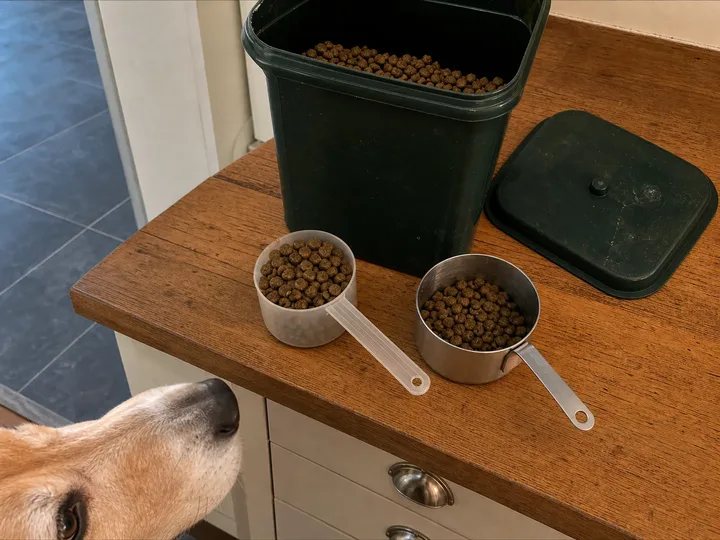
I used the plastic scoop inside the food container. My wife used a measuring cup. Maya filled the bowl to the point she remembered it reaching the last time.
We had a feeding schedule for our dog, technically. Morning and evening. What we did not have was any reliable way to know whether somebody had followed it.
Then we went too far in the other direction
After the appointment, we became determined not to double-feed him again.
This created a new problem.
One morning, my wife assumed I had fed Oscar because I was working from home. I assumed she had fed him because she was still home when I woke up. Maya saw both of us in the kitchen and reasonably assumed that at least one adult had handled it.
At lunchtime, I found Oscar asleep beside his untouched bowl.
For once, the performance was real. Nobody had fed him.
That bothered me more than the extra meals.
When a pet lives with several people, responsibility can become strangely invisible. Everyone feels responsible in general, but nobody knows who is responsible right now.
The same thing happened with walks. I would take Oscar out, forget to mention it, and my wife would take him again twenty minutes later. He never objected to this particular mistake.
Other days, each of us assumed somebody else had walked him.
We nearly missed a vet follow-up because my wife thought I had added it to the calendar and I thought she had. The appointment card spent two weeks attached to the refrigerator beneath a takeaway menu. We noticed it the night before.
There was not one irresponsible person we could blame. Our system was three people remembering things separately and hoping the memories matched.
They usually did not.
The whiteboard lasted four days
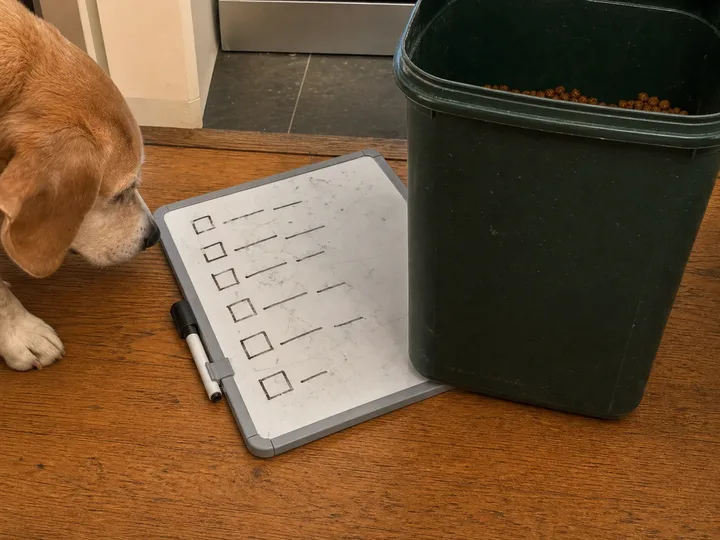
Our first solution was a small whiteboard beside Oscar’s food. It had two rows: breakfast and dinner. Whoever fed him was supposed to add a checkmark.
On the first day, everyone remembered.
On the second day, I fed him and forgot the checkmark.
On the third day, Maya added a checkmark and forgot to feed him because someone called her from upstairs while she was holding the scoop.
On the fourth day, Oscar rubbed against the board while investigating a grocery bag and knocked it down beside the food container.
We did not notice it there until days later.
We tried texting each other instead. That worked until normal family messages buried the updates.
“Fed Oscar” would disappear between a photo from school, a reminder to buy laundry detergent, and an argument about whose charger was in the living room.
Even when someone sent the message, there was no guarantee the other two people saw it.
We did not need more reminders to be responsible. We needed one place where the latest answer was always visible.
The change was almost embarrassingly small
We started recording Oscar’s meals in Petive as soon as they happened.
Not at the end of the day. Not when someone remembered. The person holding the scoop marked that breakfast or dinner was done.
The entry showed the time and who had recorded it. Everyone could see the same thing.
That was it.
The first morning, my wife recorded breakfast before leaving. When Oscar performed his starving-dog routine for me fifteen minutes later, I checked and saw her name beside the meal.
He watched me check.
Then he looked toward the food container.
“No,” I said.
He sighed so deeply that you would think I had denied him something protected by law.
Maya started recording his afternoon walks. We added reminders for the things that did not happen every day, including medication and vet appointments. If one of us completed something, the others could see it without sending a message or finding the right person in the house.
There were still mistakes. Sometimes someone forgot to record a meal and had to ask. Sometimes a reminder arrived while we were busy and was ignored.
The difference was that confusion stopped being our default.
Oscar’s portions became consistent because we finally agreed on an exact amount and a feeding schedule everyone could follow. His routine became boring, which turned out to be exactly what we needed.
A few months ago, “Did anyone feed the dog?” was a question we asked almost every day.
Now, when Oscar sits beside his bowl and tries his case on the next available human, we already know the answer.
He has been fed.
He just disagrees with the record.
Story note: This is an editorial narrative illustrating a common household care problem, not a verified customer testimonial.

Petive Editorial Team
EditorialThe Petive Editorial Team creates practical guides from current veterinary and animal-care sources, then connects that guidance to the everyday routines owners track in Petive. Every article is educational and is not a substitute for advice from your veterinarian.
Read our story