
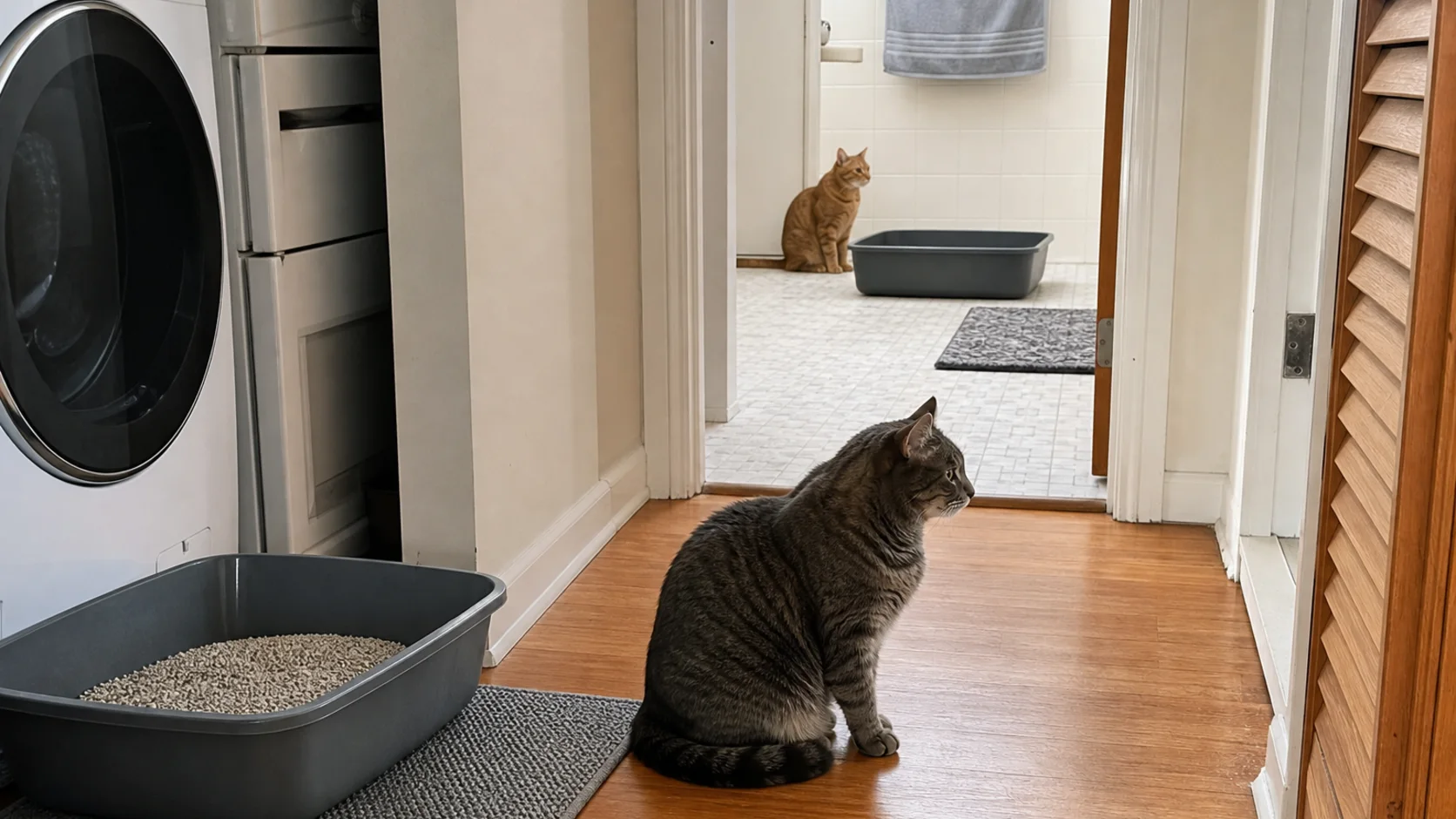
How Many Litter Boxes per Cat?
Quick answer: Use one litter box per cat plus one extra. Two cats therefore start with three boxes. Place them in separate accessible locations rather than lining every box together, because several boxes in one spot can function like one resource to a cat.
How many litter boxes do cats need?
| Number of cats | Starting number of boxes |
|---|---|
| 1 cat | 2 boxes |
| 2 cats | 3 boxes |
| 3 cats | 4 boxes |
| 4 cats | 5 boxes |
The plus-one rule reduces competition and gives a cat another option when one box is occupied, dirty, frightening, or difficult to reach. Some peaceful households manage with fewer, while cats with conflict, illness, or strong preferences may need more.
Where should litter boxes go?
- Distribute boxes across different rooms and, in multi-level homes, different floors.
- Choose quiet locations with a clear view and more than one escape route when possible.
- Keep boxes away from loud machines, narrow dead ends, food, and water.
- Make at least one box easy to enter for kittens, seniors, and cats with mobility problems.
- Avoid placing every box side by side; cats may treat the group as one station.
What size and type of box is best?
A box should be large enough for the cat to enter, turn, dig, and adopt a comfortable posture. Many commercial boxes are too small for large adult cats. Most cats prefer unscented litter, and some dislike covers that trap odor or limit escape.
Offer choices when preferences are unclear. Change litter or box style gradually and keep an established acceptable box available during the trial.
What if a cat still goes outside the box?
Add and improve boxes, but arrange a veterinary examination for a new house-soiling pattern. Urinary disease, constipation, diarrhea, pain, arthritis, stress, and conflict can all affect use. Punishment increases stress and does not identify the cause.
Keep every option inviting with the daily litter-box cleaning schedule.
Common questions
Do two cats really need three litter boxes?
Three is the recommended starting point. It gives both cats options and reduces competition when one box is dirty, occupied, or guarded.
Can litter boxes be next to each other?
They can, but side-by-side boxes may function as one resource. Distributing boxes through the home provides more meaningful choice.
Where should I put a litter box in a small apartment?
Use separate quiet, accessible locations with good ventilation and escape routes. Avoid food areas, loud appliances, and places where another pet can block access.
Sources and editorial note
This guide was prepared by the Petive Editorial Team using guidance from established veterinary and animal-care organizations. Unless a named reviewer is shown, it has not been independently reviewed by a veterinarian. It provides general educational information, not veterinary diagnosis or treatment. Ask your veterinarian about your individual pet.