
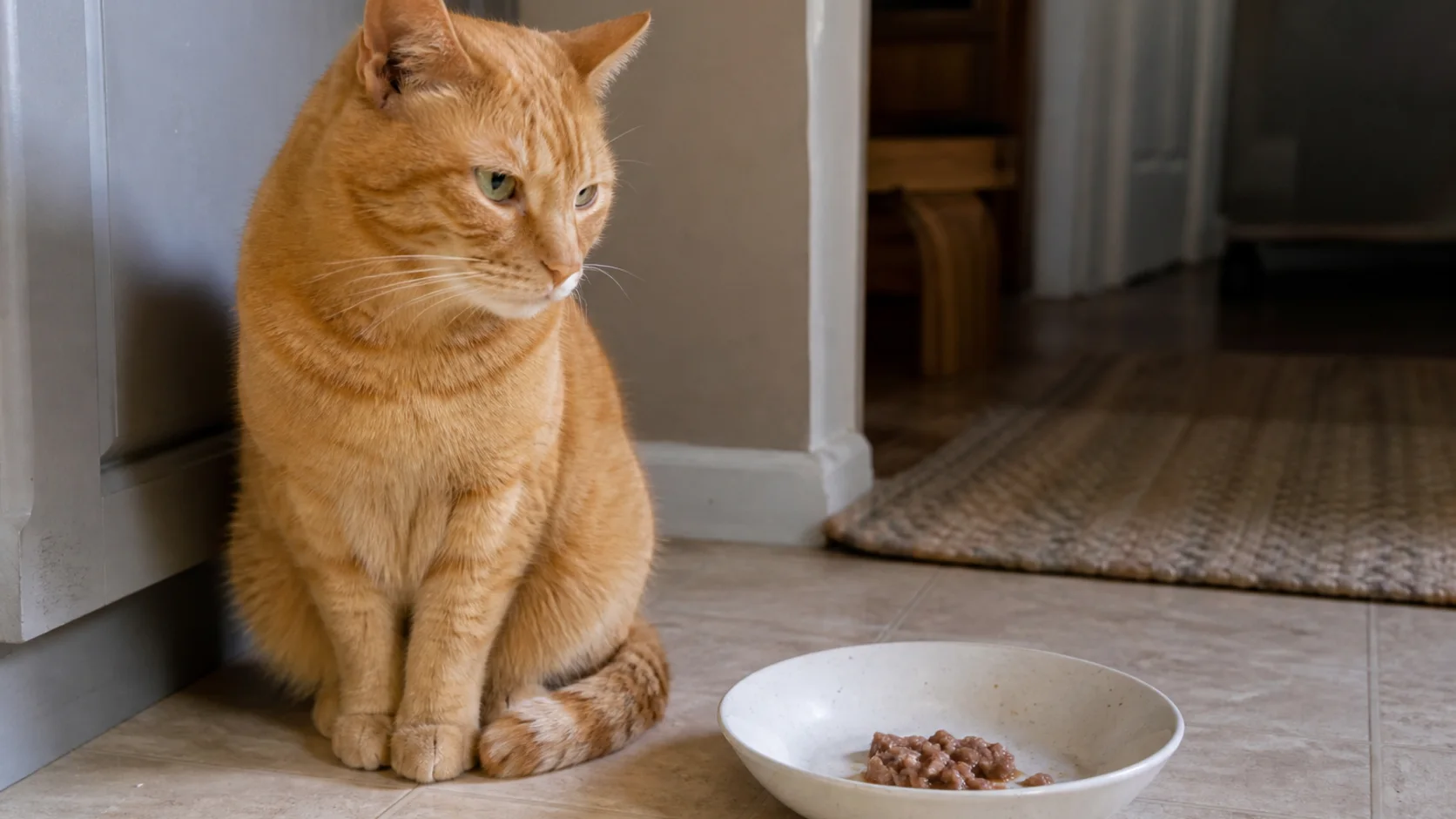
Why Is My Cat Not Eating?
Quick answer: A cat may stop eating because of dental pain, nausea, infection, organ disease, stress, a food or environment change, or many other causes. Cats can develop serious complications after a short period without adequate food. Contact a veterinarian promptly and seek immediate advice if your cat has eaten little or nothing for about 24 hours—sooner for kittens or cats already unwell.
How long can a cat go without eating?
Waiting several days is unsafe. Cornell notes that appetite loss can severely affect a mature cat after as little as 24 hours, and very young kittens become vulnerable even sooner. Overweight cats are at particular risk of hepatic lipidosis when food intake falls.
Common reasons a cat stops eating
- Dental disease, mouth injury, or pain while chewing
- Nausea, gastrointestinal disease, constipation, or pancreatitis
- Kidney, liver, hormonal, infectious, or other systemic disease
- Pain elsewhere in the body, fever, or medication effects
- Stress from moving, boarding, visitors, conflict, or a lost companion
- A sudden food change, stale food, dirty bowl, noisy location, or competition
The environment can affect appetite, but “picky” behavior should not be assumed until medical causes have been considered. Cats are skilled at hiding illness, and reduced eating may be the first visible change.
What can you safely do while arranging advice?
- Offer the cat’s familiar complete food in a clean bowl and quiet location.
- Separate pets so you can verify who ate.
- Try the usual wet food slightly warmed to increase aroma, if the cat normally eats it.
- Keep fresh water available and monitor urination.
- Record the last normal meal, amount eaten, vomiting, stool, medication, and behavior.
What information will the veterinarian need?
Be ready with the cat’s age, conditions, medication, exact food, last normal meal, estimated intake, water and litter-box changes, vomiting, diarrhea, weight change, possible toxins, and recent household events. The veterinarian may examine the mouth, hydration, temperature, abdomen, and body weight, then recommend testing based on the findings.
Common questions
Should I worry if my cat skips one meal?
A single smaller meal may occur, but a meaningful appetite change deserves close attention. Call your veterinarian if the next meal is refused, other symptoms appear, or the cat is young, elderly, overweight, or medically vulnerable.
Can stress make a cat stop eating?
Yes, but illness and pain can look similar. Do not attribute persistent appetite loss to stress without veterinary guidance.
What can I feed a cat that will not eat?
Offer the familiar food in a quiet setting while contacting your veterinarian. Avoid sudden diet experiments and do not force-feed or give medication unless directed.
Sources and editorial note
This guide was prepared by the Petive Editorial Team using guidance from established veterinary and animal-care organizations. Unless a named reviewer is shown, it has not been independently reviewed by a veterinarian. It provides general educational information, not veterinary diagnosis or treatment. Ask your veterinarian about your individual pet.