
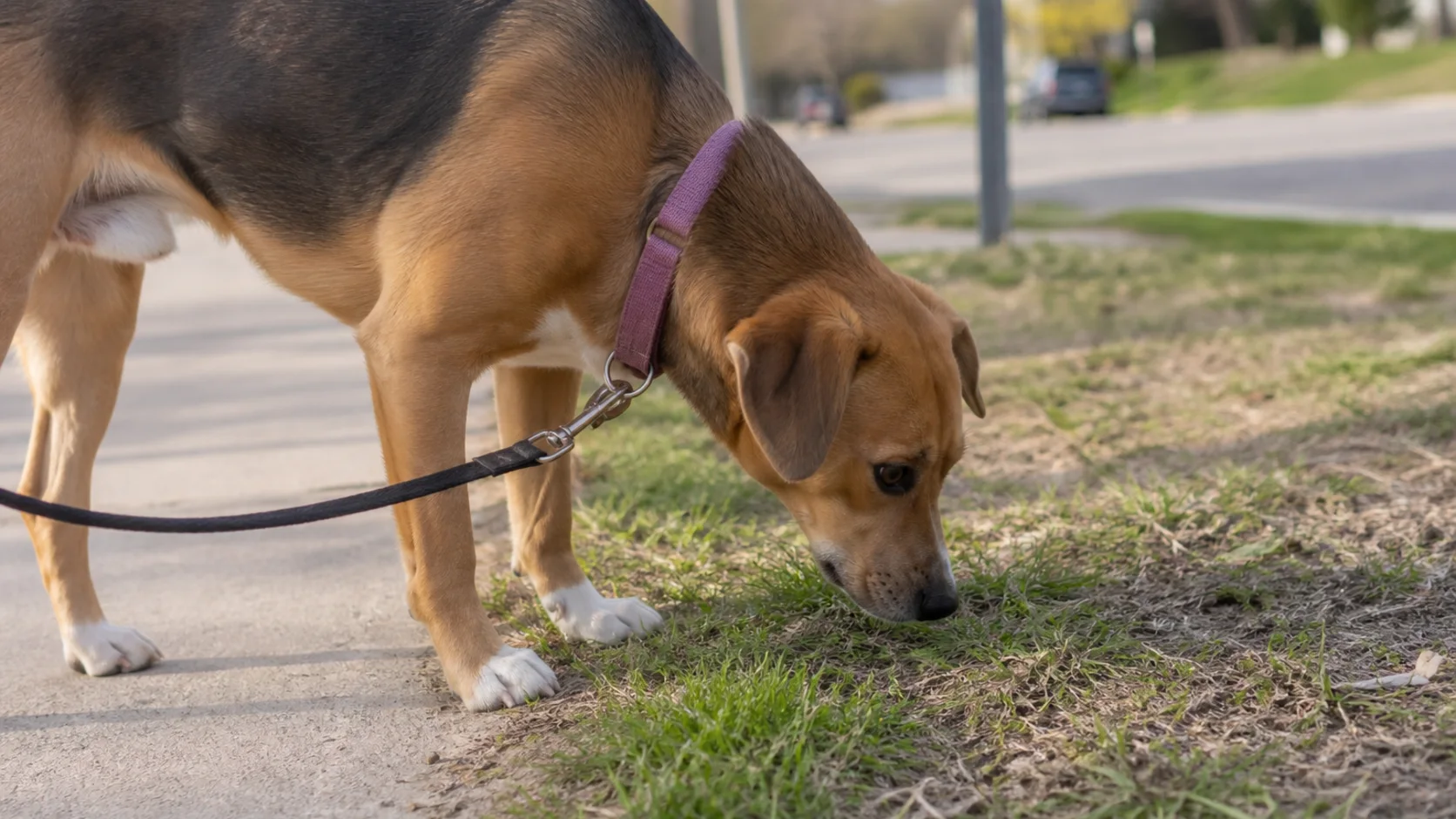
Why Do Dogs Eat Grass?
Quick answer: Occasional grass eating is common and usually does not mean a dog is sick. Dogs may like the taste, seek fiber, explore, or graze when bored. Contact your veterinarian when grass eating is sudden or frantic, happens with repeated vomiting or diarrhea, or is part of eating many non-food objects.
Why does my dog keep eating grass?
- Taste and texture: some dogs simply enjoy fresh grass.
- Normal scavenging behavior: eating plant material can be part of ordinary canine exploration.
- Fiber: grass provides roughage, although a complete diet should already meet nutritional needs.
- Boredom or anxiety: grazing can become something to do when stimulation or social contact is limited.
- Stomach discomfort: some dogs graze when nauseated, but most grass-eating dogs are not ill beforehand.
The common idea that every dog eats grass specifically to make itself vomit is not supported by observed behavior. VCA reports that fewer than one quarter of grass-eating dogs vomit afterward and only a minority appear ill before grazing.
Is grass safe for dogs to eat?
A small amount of untreated grass is often tolerated, but the lawn may carry more risk than the plant itself. Herbicides, pesticides, fertilizers, toxic plants, sharp seed heads, fecal contamination, and intestinal parasites can make grazing unsafe.
- Keep dogs away from recently treated lawns and unknown chemicals.
- Prevent eating grass contaminated with feces or standing water.
- Maintain the parasite-prevention plan recommended for your location and dog.
- Learn which plants in the garden are toxic and restrict access.
When should grass eating worry you?
Arrange veterinary advice if the behavior is new, frequent, compulsive, or accompanied by appetite loss, repeated vomiting, diarrhea, weight loss, abdominal discomfort, weakness, or unusual thirst. Urgently seek help if your dog may have eaten chemicals, a toxic plant, or a foreign object.
How to reduce grass eating
- Interrupt calmly and redirect to walking, a cue, or a safe reward.
- Add sniffing walks, play, training, and food puzzles to reduce boredom.
- Review the complete diet and treat intake with your veterinarian rather than adding fiber blindly.
- Keep the dog on a leash around unsafe lawns or compulsive grazing triggers.
- Record when it happens and whether stomach signs occur before or after.
Use the daily care log to keep those observations beside meals, walks, and other routine changes.
Common questions
Do dogs eat grass because their stomach is upset?
Some do appear to graze when nauseated, but most grass-eating dogs show no illness beforehand and do not vomit afterward.
Should I stop my dog from eating grass?
Prevent access to treated, contaminated, or unsafe areas. Occasional grazing on known untreated grass may not require intervention, but frequent or frantic eating deserves investigation.
Why does my dog eat grass and then vomit?
Grass can irritate the stomach, or nausea may have prompted the dog to graze. Repeated vomiting or other illness signs require veterinary advice.
Sources and editorial note
This guide was prepared by the Petive Editorial Team using guidance from established veterinary and animal-care organizations. Unless a named reviewer is shown, it has not been independently reviewed by a veterinarian. It provides general educational information, not veterinary diagnosis or treatment. Ask your veterinarian about your individual pet.