
We Both Assumed Someone Had Walked the Dog
The leash was still on the door at ten o’clock. That was when we finally compared our versions of the evening.
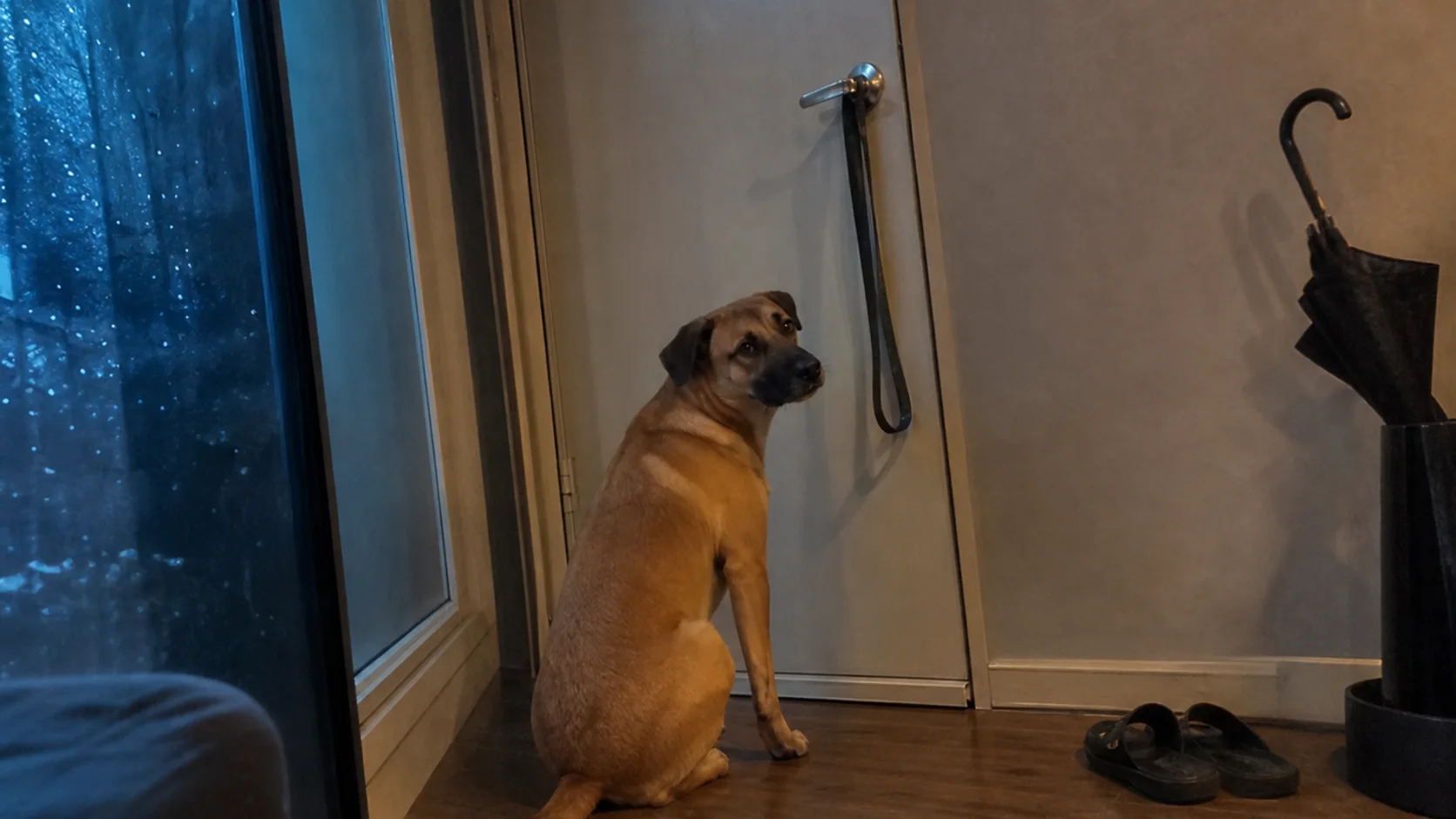
At ten past ten, I noticed the leash was still hanging from the front-door handle.
Otis was sitting below it. Not whining, not scratching—just waiting with the particular stillness of a dog who had been expecting the evening to go differently.
It had rained since lunchtime. My shoes were dry. My partner’s shoes were dry. Our son’s trainers were beside the radiator, but they had been there since yesterday.
The television went quiet. Three people looked at one another.
Nobody had.
Our schedule had stopped being a schedule
For years, the arrangement was automatic. I took the morning walk. My partner did the evening. Our seventeen-year-old, Callum, covered weekends or any day one of us asked.
Then my partner’s shifts changed. I started working from home two days a week. Callum got a part-time job with hours that moved around. Each person’s idea of “normal” became slightly different.
That rainy evening, I heard the front door at six and assumed my partner had taken Otis. It was actually Callum leaving for work. My partner saw me put on a raincoat at seven and assumed I was taking Otis. I was going to the corner shop.
Callum saw Otis asleep after dinner and assumed one of us had worn him out.
All three versions made sense alone. Together they left a dog waiting by the door.
I took him out immediately. He spent several minutes inspecting the same wet hedge with enormous concentration, then looked back at me as if the delay had been noted.
Asking more did not tell us more
For the next week, our group chat filled with walk messages.
Sometimes the answer arrived an hour later. Sometimes “yes” referred to the request, not the walk. Once I took Otis out while my partner was typing that she would do it.
Otis got two walks that evening. He considered the new system a major improvement.
We tried hanging the leash on a different hook after each walk. This failed because we owned three leashes and nobody agreed which hook meant what.
We started recording the thing that happened
The useful change was logging walks in Petive to separate the plan from the completed walk. The evening task could belong to my partner, but if Callum covered it, he marked it done with the time. Everyone saw the same update.
If the normal window passed, the reminder went to all of us. Nobody had to send a vague question into a chat and wait. Someone either took the walk or claimed it clearly.
We also began noting anything unusual: Otis refusing the rain, a shorter route, a sore paw that needed another look. The notes were brief because long systems do not survive in our house.
The leash still hangs on the front door. It turns out it is a good place for a leash and a terrible place for shared information.
Story note: This is an editorial narrative illustrating a common household care problem, not a verified customer testimonial.
Petive Editorial Team
EditorialThe Petive Editorial Team creates practical guides from current veterinary and animal-care sources, then connects that guidance to the everyday routines owners track in Petive. Every article is educational and is not a substitute for advice from your veterinarian.
Read our story