Puppy Potty Training Schedule
Quick answer: Take a young puppy outside immediately after waking, after every meal or big drink, after play, before and after confinement, and before bed. Very young puppies may also need scheduled trips about every hour while awake. Increase the interval gradually as the individual puppy succeeds.
A practical puppy potty schedule
| Moment | What to do | Why |
|---|---|---|
| First thing in the morning | Go directly outside | A full overnight bladder needs priority |
| After a meal | Go out within about 5–30 minutes | Eating commonly triggers elimination |
| After drinking, play, or training | Offer a prompt toilet trip | Activity and water increase urgency |
| After every nap | Go out immediately | Waking is a predictable trigger |
| Before confinement and immediately after | Use the toilet area | Reduces accidents and builds routine |
| Last thing at night | Take a calm final trip | Young puppies may still need overnight outings |
A schedule is a starting framework, not permission to ignore the puppy’s signals. Sniffing, circling, wandering away, suddenly stopping play, whining, or heading toward a previous accident spot means go outside now.
How long can a puppy hold its bladder?
The age-in-months-plus-one rule is often used as a rough maximum number of hours between breaks in controlled conditions. It is not a target and can overestimate what a puppy can manage while awake, active, excited, recently fed, or newly learning.
What to do during each potty trip
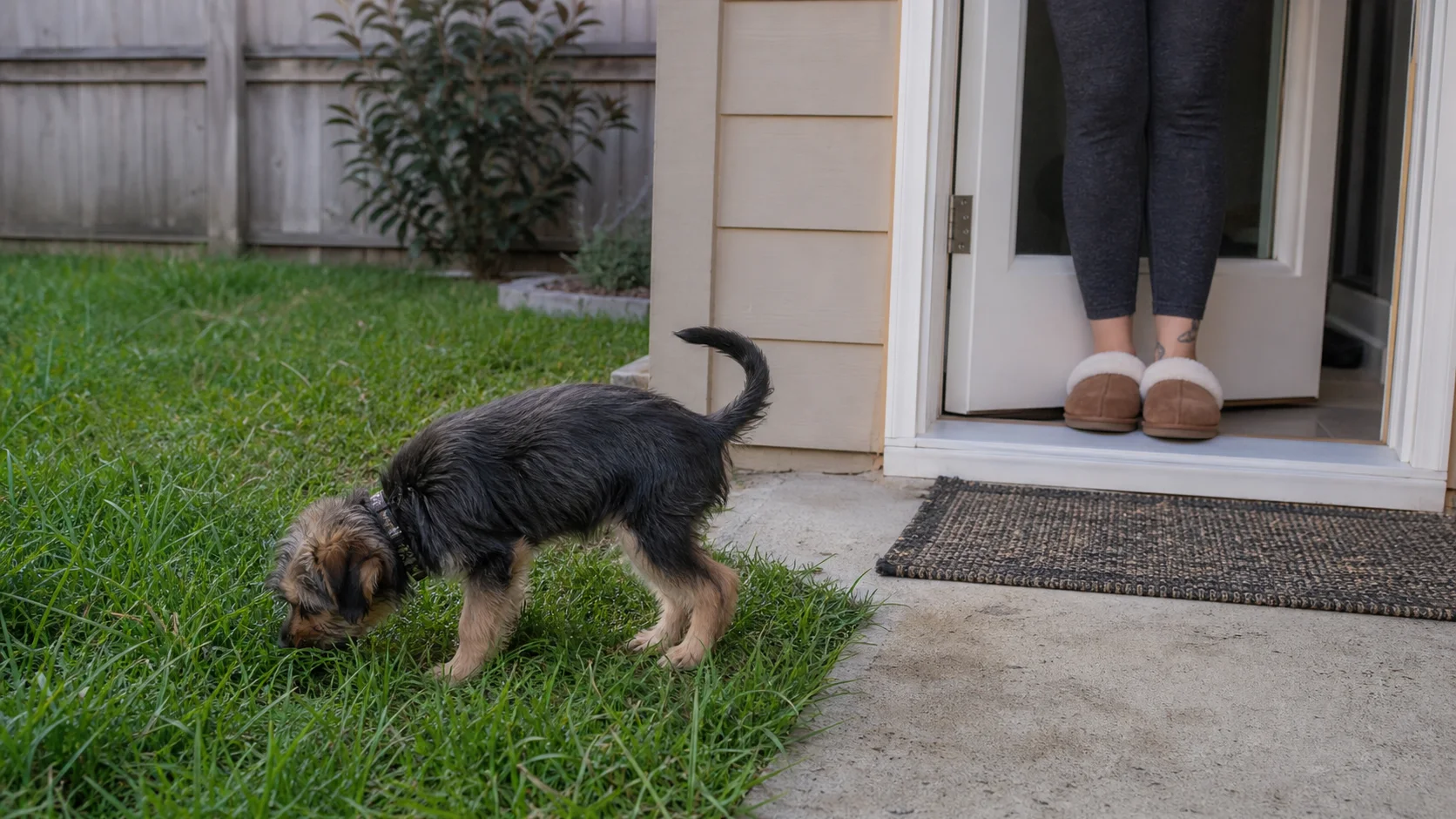
- Use the same door and a consistent toilet area.
- Keep the puppy on leash so you can observe and reward the result.
- Stand quietly instead of turning the trip into play immediately.
- Reward as soon as the puppy finishes outside.
- If nothing happens, supervise closely indoors and try again shortly.
- Allow a little sniffing or play after success so toileting does not always end outside time.
How to handle accidents without slowing training
Do not punish, shout, or rub a puppy’s nose in an accident. If you catch the puppy beginning to eliminate, interrupt gently and go outside. Clean the indoor area with an appropriate enzymatic cleaner and adjust supervision or timing.
A puppy that was progressing and suddenly urinates much more often, strains, seems painful, drinks excessively, has diarrhea, or cannot improve despite a consistent routine should be examined by a veterinarian.
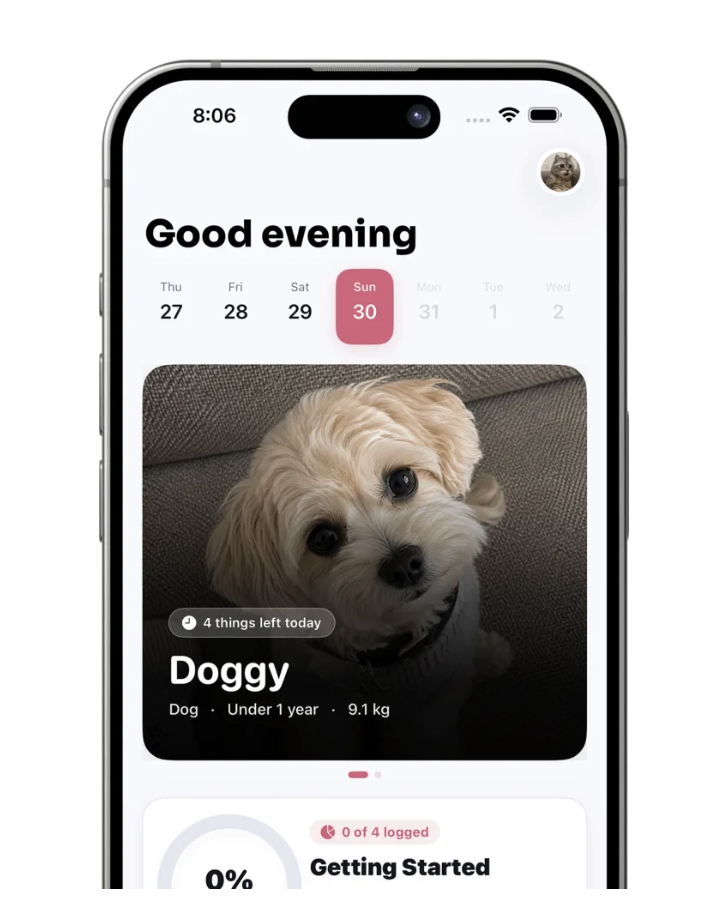
A shared pet-care routine helps families record the last toilet trip instead of each person guessing when the puppy was taken out.
Common questions
How often should I take an eight-week-old puppy out?
Offer very frequent trips—often about hourly while awake—plus immediately after sleeping, eating, drinking, playing, and before and after confinement.
Should I wake my puppy to pee at night?
Very young puppies often need an overnight toilet trip. Keep it calm and brief. As bladder control improves and the puppy stays dry, the interval can gradually lengthen.
How long does puppy potty training take?
Progress varies with age, history, health, supervision, and consistency. Many puppies improve substantially over several months, but occasional accidents do not mean training has failed.
Sources and editorial note
This guide was prepared by the Petive Editorial Team using guidance from established veterinary and animal-care organizations. Unless a named reviewer is shown, it has not been independently reviewed by a veterinarian. It provides general educational information, not veterinary diagnosis or treatment. Ask your veterinarian about your individual pet.