
Our Pet Sitter Was Following Instructions We’d Forgotten to Update
The instructions were detailed, printed, and completely out of date in three places that mattered.
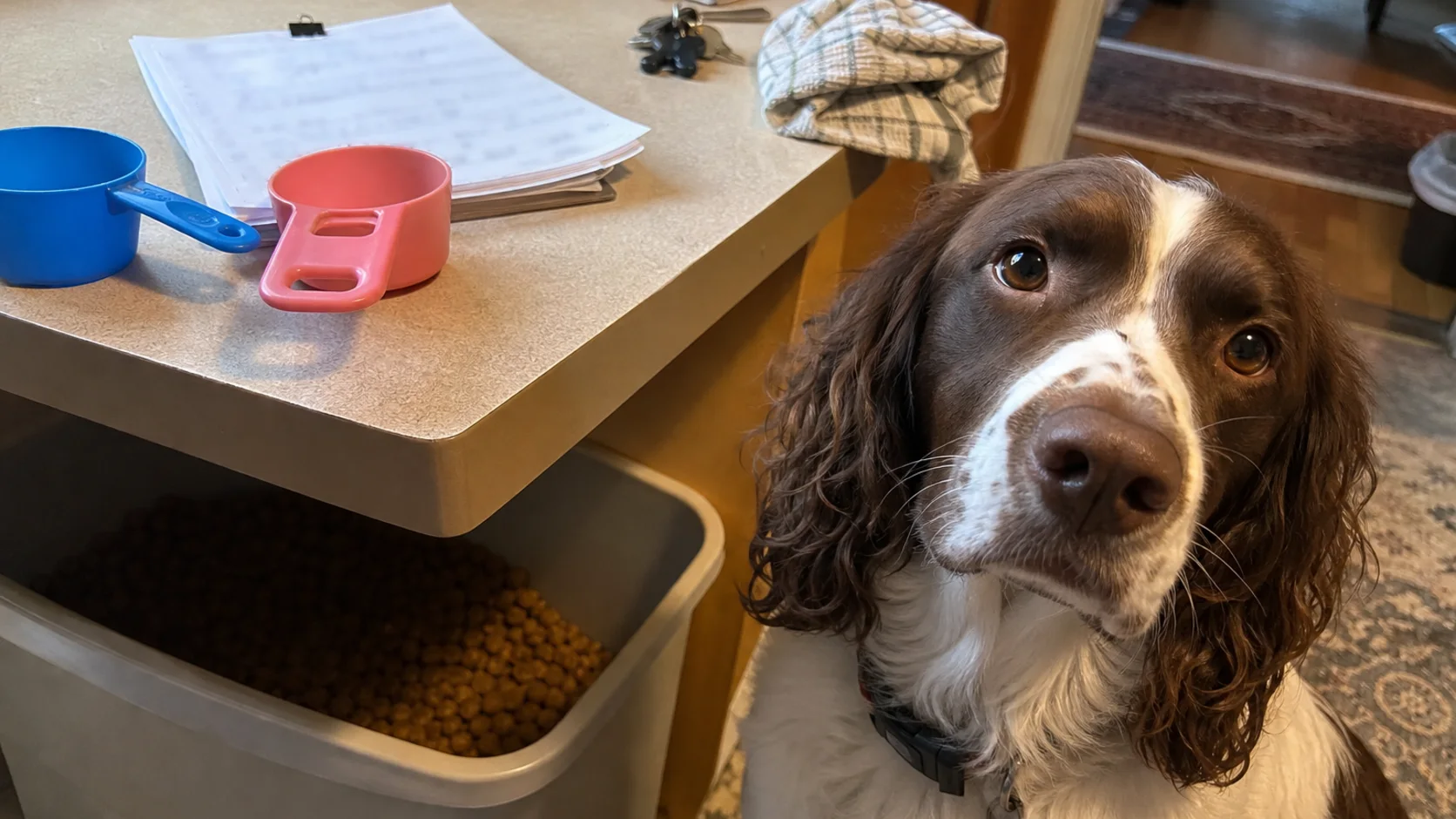
The first message from Leah was a photo of two plastic scoops.
My partner and I were in an airport queue, four hours into a trip we had been planning for a year. I zoomed in on the photo. The blue scoop was the old one. The pink scoop was the newer, smaller one.
The instructions on our counter said one scoop. They had been written when one scoop meant blue.
Marlow, our spaniel, was visible at the bottom of the photo looking pleased with the investigation.
We had prepared carefully
This was not a last-minute sticky note. I had printed four pages. They covered meals, walks, sleeping, bins, the back-door lock, our veterinarian, and the weird noise the boiler makes.
Leah came over before the trip. We walked the usual route and showed her where everything lived. She asked good questions. I remember feeling unusually adult about the whole handoff.
What I did not do was read the instructions from the perspective of someone who had not lived through the last six months with us.
We had changed Marlow’s food, and the portion had changed with it. Construction had closed the quiet end of his normal walking route. The spare key was no longer under the blue planter because we had moved the planter and apparently expected this fact to travel telepathically.
Each change was obvious to us. None had made it onto the page.
Leah was doing exactly what we asked. The problem was that we had asked her to care for the version of Marlow who existed last winter.
The messages kept coming
The scoop question was followed by the route question. Then the key question. Each message was polite, and each one made the same point without saying it: your guide is not the source of truth you think it is.
I started sending corrections in the chat. My partner sent two at the same time. Leah had to scroll between our replies to work out which answer was newest.
At one point I wrote, “Ignore my last message,” and immediately understood that we had recreated the problem in a different format.
Marlow was fine. Leah was experienced and cautious, and she asked whenever something did not match. The failure belonged to us, not her.
Once we stopped being embarrassed, we put one clean set of current instructions in Petive together. The old printout went into a drawer so it could not compete with the update. Leah had one place for the routine and one place to record what she had done.
The useful part was seeing the day happen
After breakfast, Leah marked it complete with the amount. After the walk, she logged the time and a quick note that Marlow had refused to pass the roadworks. We did not need a stream of reassuring photos or repeated “everything okay?” messages.
When we changed his food again months later, we updated the amount in the same place that day. The instructions no longer became a historical document the moment they were printed.
Before our next trip, we also worked through a pet-sitter instructions checklist and treated the handoff as a real walkthrough, not a tour of where the food was kept.
Leah still sends photos. Most of them are Marlow asleep across the sofa she was told he was not allowed on.
That particular instruction is current. He and Leah have simply chosen not to recognize it.
Story note: This is an editorial narrative illustrating a common household care problem, not a verified customer testimonial.

Petive Editorial Team
EditorialThe Petive Editorial Team creates practical guides from current veterinary and animal-care sources, then connects that guidance to the everyday routines owners track in Petive. Every article is educational and is not a substitute for advice from your veterinarian.
Read our story