How to Switch Dog Food Safely
Quick answer: Switch dog food gradually over about four to seven days for most healthy dogs: begin with mostly old food and a little new food, then increase the new portion in stages. Dogs with sensitive stomachs or medical diets may need a slower veterinarian-directed transition.
A simple dog-food transition schedule
| Transition day | Old food | New food |
|---|---|---|
| Days 1–2 | 75% | 25% |
| Days 3–4 | 50% | 50% |
| Days 5–6 | 25% | 75% |
| Day 7 | 0% | 100% |
Cornell describes a four-day version of the same staged approach for many dogs. A seven-day schedule is gentler and easier to pause. The right pace depends on why the food is changing and how the dog responds.
Keep the total amount accurate
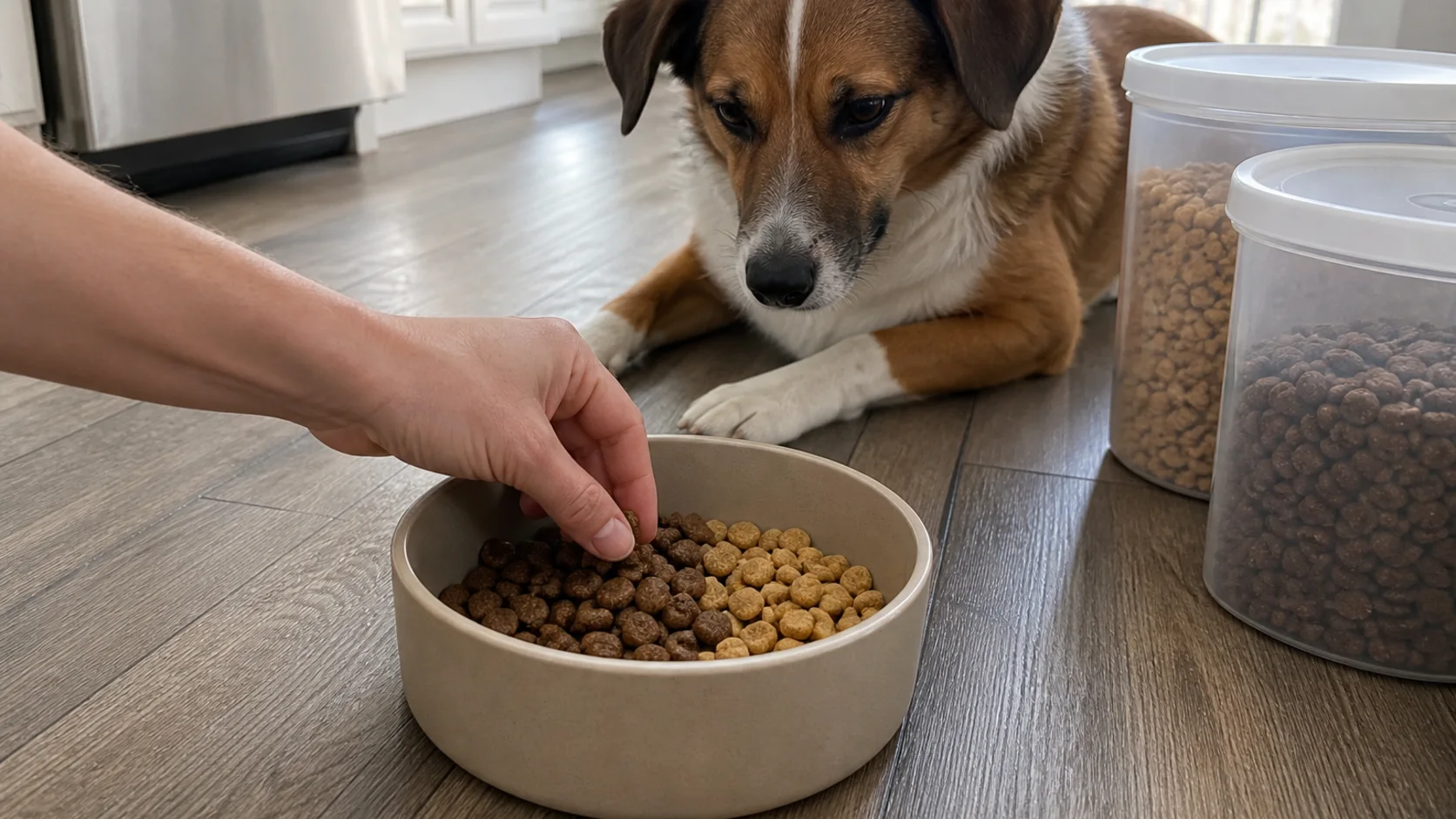
Percentages describe the mixture, not two full meals added together. Determine the dog’s appropriate total daily calories and measure both foods within that total. Foods can contain very different calories per cup or can.
- Check calories per cup, can, or gram on both labels.
- Use a kitchen scale when precision matters.
- Keep treats and toppers consistent during the transition.
- Do not judge the new food after one meal unless a reaction is serious.
What if the new food causes diarrhea or vomiting?
Mild stool softening can occur when a change moves too quickly. Pause the progression and contact your veterinarian for guidance. Do not repeatedly switch between several diets, add supplements, or give human anti-diarrheal medicine without advice.
Call promptly for repeated vomiting, blood, black stool, marked lethargy, abdominal pain, refusal to eat, dehydration, or diarrhea lasting more than a day or two. Puppies, seniors, and medically vulnerable dogs need earlier advice.
What to track during a food change
- Exact mixture and amount offered
- Appetite and amount eaten
- Stool frequency and consistency
- Vomiting, gas, itching, or ear and skin changes
- Body weight and body condition over time
Keep meal amounts clear for every caregiver with a shared dog-feeding schedule.
Common questions
Can I switch dog food immediately?
A sudden switch may cause digestive upset. Transition gradually unless a veterinarian directs an immediate change for a medical or safety reason.
How long should a dog-food transition take?
About four to seven days works for many healthy dogs. Sensitive dogs and therapeutic diets may need a slower individualized schedule.
What if my dog refuses the new food?
Do not let refusal continue without advice. Return to a tolerated stage if appropriate and contact your veterinarian, especially if the dog eats little or has other symptoms.
Sources and editorial note
This guide was prepared by the Petive Editorial Team using guidance from established veterinary and animal-care organizations. Unless a named reviewer is shown, it has not been independently reviewed by a veterinarian. It provides general educational information, not veterinary diagnosis or treatment. Ask your veterinarian about your individual pet.