
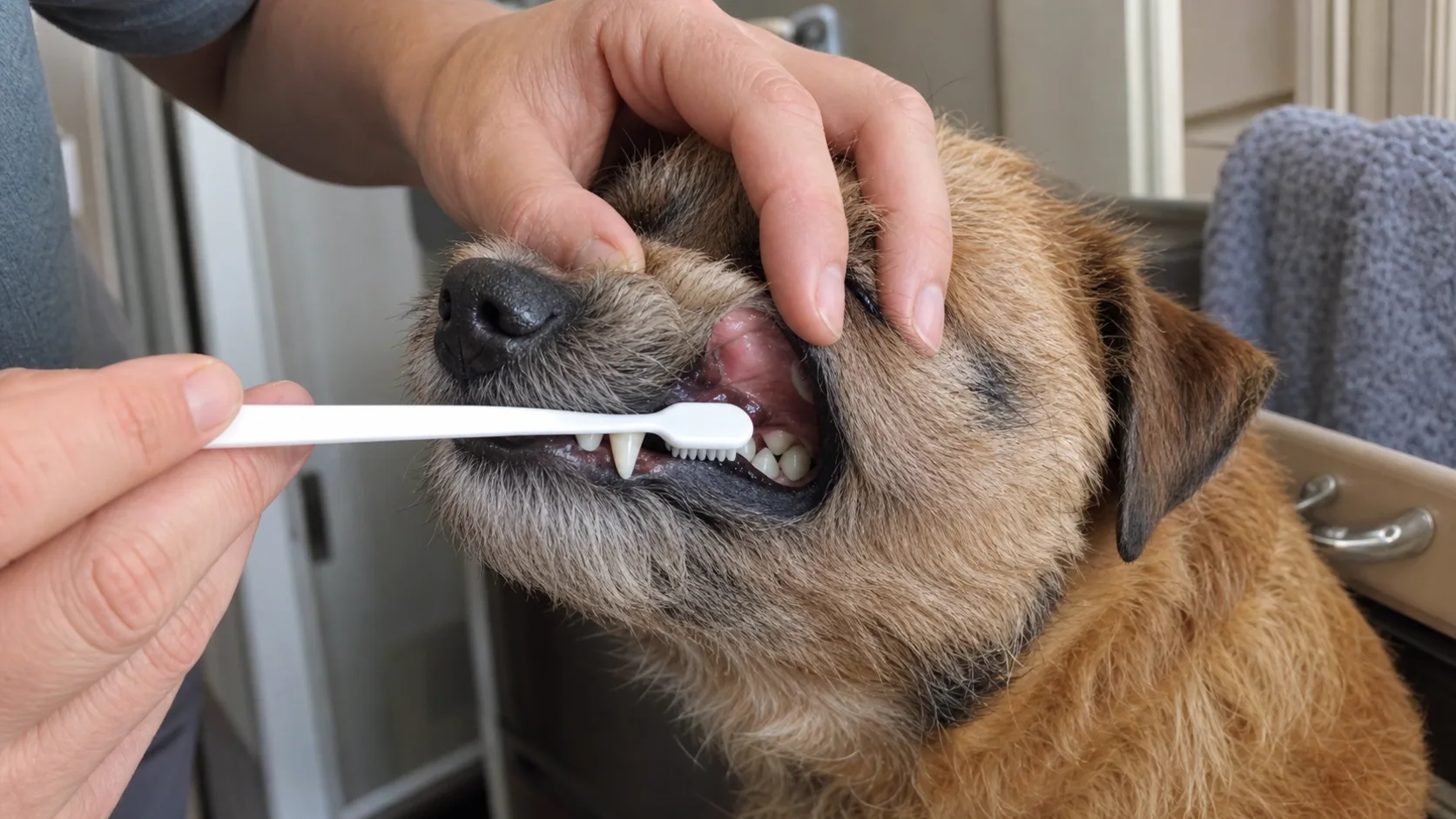
How Often Should You Brush a Dog’s Teeth?
Quick answer: Brush your dog’s teeth every day if possible. Daily brushing is the most effective home routine for removing plaque before it hardens. If daily care is not yet realistic, build toward it gradually and use veterinary-approved dental products as support—not as a complete substitute.
How often do dog teeth need brushing?
Plaque begins accumulating again quickly after cleaning, so occasional brushing provides limited protection. Daily brushing creates the most consistent mechanical removal. A few times per week is better than never, but the goal should remain a calm daily routine.
How to teach a dog to accept tooth brushing
- Begin when the dog is relaxed and keep sessions under a minute.
- Reward touching the muzzle and briefly lifting the lip.
- Introduce pet toothpaste on a finger before adding a brush.
- Brush the outer surfaces where plaque commonly accumulates.
- Use gentle small circles without forcing the mouth open.
- Stop before the dog becomes frightened and build duration over days or weeks.
Bleeding, severe odor, loose teeth, facial swelling, pain, difficulty chewing, or refusal to let the mouth be touched can indicate dental disease. Arrange a veterinary examination rather than trying to brush through pain.
Do dental chews and water additives replace brushing?
Dental diets, chews, wipes, and water additives may help when chosen carefully, but they do not make all products equal and generally do not remove established tartar. Look for products accepted by the Veterinary Oral Health Council and ask your veterinarian what fits your dog’s health and chewing behavior.
- Choose the correct chew size and supervise to reduce choking or obstruction risk.
- Count edible dental products as part of daily calories.
- Avoid bones, antlers, and extremely hard objects that can fracture teeth.
- Do not scrape tartar at home; apparent surface cleaning does not treat disease below the gumline.
When does a dog need professional dental care?
Home brushing prevents plaque but cannot reverse advanced periodontal disease or safely clean below the gumline. Your veterinarian should examine the mouth during routine visits and recommend a professional anesthetized dental assessment and cleaning when needed.
See how dental checks fit into guidance on how often pets should go to the vet.
Common questions
Is brushing a dog’s teeth once a week enough?
Once weekly is better than no brushing, but plaque returns quickly. Daily brushing is the recommended goal for meaningful home plaque control.
Can I brush my dog’s teeth with baking soda?
Do not improvise with human or household products. Use pet toothpaste recommended by your veterinarian and formulated to be swallowed safely.
Why do my dog’s gums bleed when I brush?
Bleeding can indicate inflamed gums, dental disease, trauma, or overly forceful brushing. Stop and arrange a veterinary dental examination.
Sources and editorial note
This guide was prepared by the Petive Editorial Team using guidance from established veterinary and animal-care organizations. Unless a named reviewer is shown, it has not been independently reviewed by a veterinarian. It provides general educational information, not veterinary diagnosis or treatment. Ask your veterinarian about your individual pet.