How Much Water Should a Dog Drink?
Quick answer: A useful starting estimate is about 1 ounce of water per pound of body weight each day, or roughly 60 milliliters per kilogram. This is not a fixed target: food type, weather, exercise, age, nursing, medication, and health can all change how much an individual dog drinks.
How much water does a dog need per day?
| Dog’s weight | Starting daily estimate | Approximate cups |
|---|---|---|
| 10 lb / 4.5 kg | 10 oz / 300 mL | 1¼ cups |
| 25 lb / 11 kg | 25 oz / 740 mL | 3 cups |
| 50 lb / 23 kg | 50 oz / 1.5 L | 6¼ cups |
| 75 lb / 34 kg | 75 oz / 2.2 L | 9⅓ cups |
Use the table as a reference point, not a drinking quota. A dog eating wet food may drink less from the bowl because the food supplies moisture. A dog exercising in warm weather may need considerably more. Fresh water should normally remain available at all times.
How to measure what your dog actually drinks
Measure the water added to a clean bowl at the same time each morning. At the end of 24 hours, measure what remains and account for any refills. Repeat for several ordinary days because one hot walk or spilled bowl can distort a single day.
- Use one measured bowl when practical, while keeping enough water available.
- Note wet food, ice cubes, broth approved by your veterinarian, and other moisture sources.
- Record heat, exercise, vomiting, diarrhea, and medication changes.
- In a multi-pet home, separate bowls may be needed to identify one animal’s intake.
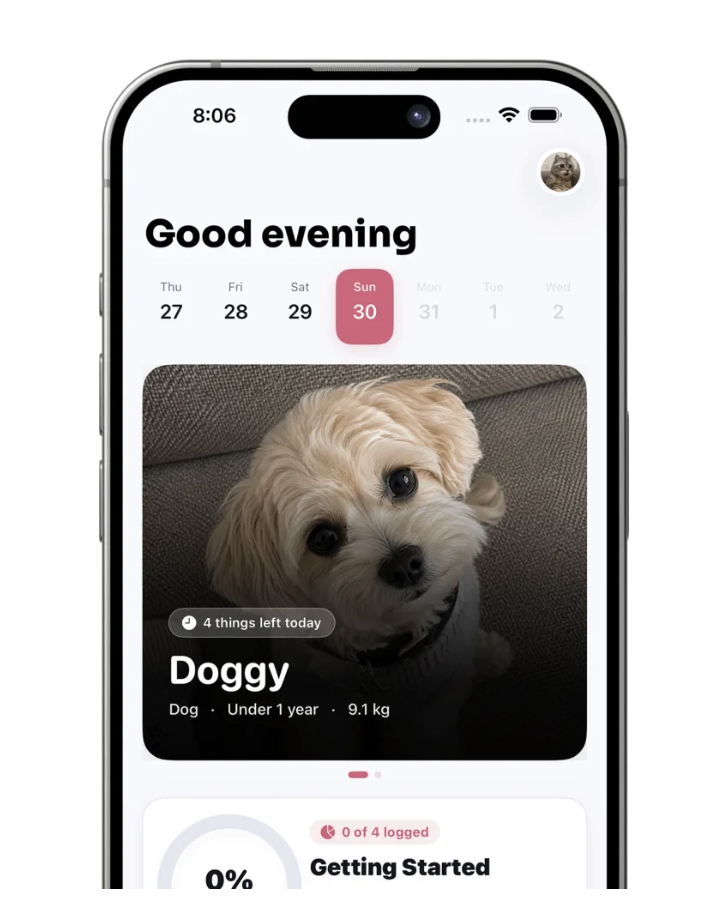
If several people refill the bowl, a shared daily care log can prevent missing refills and make a real change in drinking easier to spot.
When is drinking more or less a concern?
Contact your veterinarian when your dog’s drinking changes noticeably without a simple explanation, especially if the change persists. Increased thirst can accompany kidney or liver disease, diabetes, hormonal disease, infection, or certain medications. Drinking less may occur with nausea, pain, dental problems, or illness.
- Seek prompt advice if reduced drinking occurs with vomiting, diarrhea, weakness, dry or tacky gums, collapse, or inability to keep water down.
- Arrange an examination for increased thirst paired with frequent urination, accidents, appetite or weight changes, or lethargy.
- Call sooner for puppies, seniors, nursing dogs, and dogs with a known medical condition.
A practical water-bowl routine
- Wash food and water bowls with soap and water every day.
- Refresh water at least daily and whenever it is dirty, warm, or low.
- Place bowls where the dog can reach them without competition or obstacles.
- Carry a separate clean water source on walks and trips.
- Learn your dog’s normal pattern instead of chasing one perfect number.
Common questions
How much water should a 50-pound dog drink?
About 50 ounces, or roughly 1.5 liters, per day is a useful starting estimate. The actual amount may be higher or lower depending on diet, activity, temperature, and health.
Should a dog have water available overnight?
Healthy dogs should generally have access to fresh water overnight. Do not restrict water to reduce toilet trips unless your veterinarian has given specific instructions.
Does wet dog food count toward water intake?
Yes. Wet food contains substantial moisture, so dogs eating it may drink less from the bowl than dogs eating dry food.
Sources and editorial note
This guide was prepared by the Petive Editorial Team using guidance from established veterinary and animal-care organizations. Unless a named reviewer is shown, it has not been independently reviewed by a veterinarian. It provides general educational information, not veterinary diagnosis or treatment. Ask your veterinarian about your individual pet.