
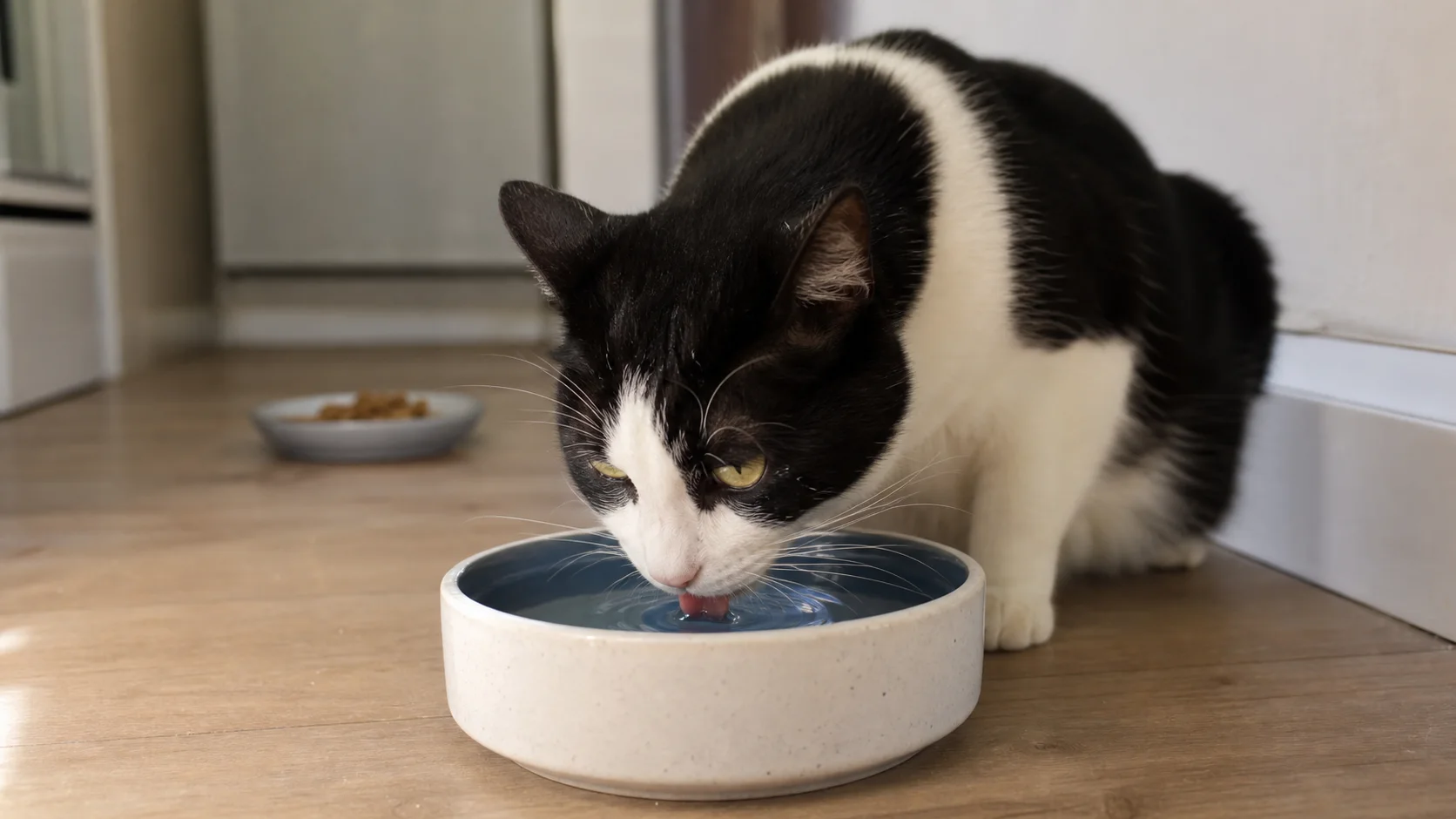
How Much Water Should a Cat Drink?
Quick answer: Cats need water every day, but there is no useful one-size-fits-all bowl target because food supplies part of the total. Cats eating wet food often drink very little from a bowl; cats eating dry food usually drink more. The most important signals are fresh access and a change from your cat’s normal drinking or urination.
How much water does a cat need?
A cat’s total water comes from drinking, food moisture, and normal metabolism. Wet food is commonly around 70–80% water, while dry food contains much less. Two cats of the same weight may therefore visit the bowl very differently and still receive similar total moisture.
How to encourage a cat to drink more water
- Offer several clean bowls in quiet locations.
- Keep water away from litter boxes and, for cats that prefer it, away from food.
- Try wide ceramic or stainless-steel bowls that do not press on the whiskers.
- Refresh the water and wash bowls daily.
- Try a clean fountain if the cat prefers moving water.
- Discuss wet food or adding water to food with your veterinarian.
Change one variable at a time. A fountain is not helpful if it is noisy or difficult to clean, and adding water to food is not useful if the cat then refuses the meal.
When is drinking more or less a warning sign?
Increased thirst or larger urine clumps can accompany kidney disease, diabetes, hyperthyroidism, urinary disease, medication effects, and other conditions. Reduced drinking with reduced eating, vomiting, diarrhea, weakness, or dry gums can accompany dehydration or illness.
Contact your veterinarian about a persistent change. Seek urgent care if a cat repeatedly enters the litter box but produces little or no urine, particularly a male cat; urinary blockage is an emergency.
How to monitor hydration in a multi-cat home
- Place water in more than one location to reduce competition.
- Watch litter-box clump size and frequency for each cat where possible.
- Measure refills for a few days if a change is suspected.
- Record wet versus dry food and any diet change.
- Report appetite, weight, urination, vomiting, and energy changes together.
Common questions
Why does my cat barely drink water?
Cats eating wet food may obtain much of their moisture from meals. If low drinking is new, occurs with reduced eating or urination, or worries you, contact your veterinarian.
Is a water fountain better for cats?
Some cats prefer moving water and drink more from a fountain; others do not. Choose an easy-to-clean fountain, refresh it regularly, and continue providing another bowl.
Why is my cat suddenly drinking a lot?
A persistent increase can be associated with kidney disease, diabetes, hyperthyroidism, medication, and other conditions. Arrange a veterinary examination rather than restricting water.
Sources and editorial note
This guide was prepared by the Petive Editorial Team using guidance from established veterinary and animal-care organizations. Unless a named reviewer is shown, it has not been independently reviewed by a veterinarian. It provides general educational information, not veterinary diagnosis or treatment. Ask your veterinarian about your individual pet.